
Expert NHL Betting Tips and Ice Hockey Predictions
 Available in US
Advanced NHL Betting Frameworks for UK Punters
The first NHL season I ever properly bet, back in 2017, I lost £640 in October alone. Not because my picks were terrible — they were roughly break-even on closing line value — but because I was betting home favourites at -180 and feeling clever about it. That was the season I worked out something every UK punter eventually has to face: in the NHL, the gap between home favourites winning 64.1% of the time and home underdogs covering the spread 63.9% of the time is where almost all the long-term money lives. Both numbers are true. One pays. The other empties accounts. To maximize your returns on heavy favorites, it is essential to master a reliable puck line betting strategy before the regular season begins.
This is a framework piece, not a tip sheet. By the end of it you should have a repeatable weekly process that survives variance, accounts for UK-specific friction (late puck-drops, fractional odds, restricted props), and stops you doing the thing I did in 2017. I’ve been modelling NHL and EIHL markets for nine years and the punters who last are the ones who treat the 82-game schedule as a rhythm, not a series of isolated coin flips.
The 82-game season has a rhythm — bet to it
If you sit down on a random Tuesday in November and try to handicap every game on the slate, you’ll be exhausted by Christmas and broke by the All-Star break. The NHL season has clear phases, and the betting markets respect those phases more than punters realise.
October is the worst month to bet aggressively. Books haven’t fully calibrated to roster turnover, injury news is patchy, and lines are slow to react to new systems under new coaches. I’ve kept my October stakes at half-size every year since 2019 and my ROI has gone up every single time. By November the market starts behaving more rationally. Power-play units have ten games of data. Backup goalies have shown what they can and can’t do. Lines tighten because the books have better priors than you do, but so do you.

The middle of the season — late November through the All-Star break — is the densest stretch of back-to-backs. In 2023-24, the New Jersey Devils played 16 back-to-back pairs, the most in the league, while Seattle Kraken played only seven. That’s a 9-game gap in fatigue exposure between two teams in the same league, and the books don’t always price it cleanly across all 32 schedules. If you only watch one variable across October to February, watch back-to-back density by team. It alone can produce a handful of standalone bets a week.
March and early April are the tank-and-push window. Teams chasing playoff spots start playing systems-first hockey. Teams out of contention rest veterans. Totals become harder to handicap because intent diverges by club. I scale back my totals exposure in March by roughly 30% relative to November and put more weight on team-total unders for clubs whose head coach has openly talked about defensive structure as a playoff prep. Then April is for closing-line shopping, not new positions.
Treat the season as four micro-seasons, not one ten-thousand-step marathon. Calibrate your aggression to the calendar.
Reading line movement when you’re five time zones away
Here’s a problem unique to UK NHL bettors that nobody on US sites bothers to write about: you sleep through most of the meaningful price action. By the time you wake up on a Tuesday morning to a 7:30pm puck-drop in Dallas, the line has already moved twice on US sharp action you never saw.

The trick is to learn what an opening line is supposed to look like and compare it to what’s actually sitting in your UK book at lunchtime. If a road favourite opened at -125 in the US overnight and your UK book is offering -135 the next morning, two things have happened: sharp money has come in on the road side, and your book has shaded the price. Sometimes that’s reverse line movement — the bet count says home, the line moves road — and that’s the single cleanest signal of sharp action I know. I won’t bet against reverse line moves at any size without a very specific reason.
The other UK-specific tell is the size of the move between the morning and the afternoon. NHL lines genuinely don’t move much from open to close compared to NFL or even MLB. A two-cent move on the moneyline (say -120 to -130) is meaningful. A five-cent move is loud. Anything bigger than that, and you should be asking what news you’ve missed — usually a goalie change announced at morning skate, which in UK time happens around 4pm to 5pm.
One Covers piece I read years ago put it well: Handicapping referees is an undervalued method of discovering an edge in the odds. NHL referees and linesmen all have their unique tendencies, especially when it comes to calling penalties.
That’s true, but it’s the easier version of the broader point — handicapping the people who set the lines is even more valuable. Books staffed by hockey specialists react faster to goalie news than books that treat the NHL as a fringe product. Knowing which UK books fall into which category is the difference between catching the stale -120 and watching it disappear into -140 before you can click.
Practical rule for UK punters: check your bet at three points — within an hour of opening (if you can), at lunchtime, and within thirty minutes of puck drop. The closing line is the truest price the market produces. If you’re consistently beating it, the rest follows.
The favourite-underdog asymmetry that funds careers
I want to spend real time on this because the data is genuinely striking and most UK punters never internalise it. Home favourites in the NHL won 64.1% of their games in 2024-25, and home teams overall won 56.6% of games outright. So far, this matches everyone’s intuition: home ice matters, favourites win more, bet the chalk.
Now the twist. Home underdogs covered the puck line — that is, lost by one goal or won outright — 63.9% of the time in 2025. Home favourites covered the puck line only 41.8% of the time. The same teams that win 64% of straight-up games cover the spread less than 42% of the time. The market knows home favourites win; the market doesn’t quite know how to price the margin.

And the broader figure that I keep taped to my monitor: across all NHL games in 2025, the underdog (home or road) covered the +1.5 puck line in 60% of games. Hockey is a low-scoring sport where one empty-netter can decide a cover, and the structure of the market consistently underprices the favourite’s risk of failing to win by two.
What do you do with this? You don’t blindly back every home dog. You learn which spots magnify the asymmetry. Home dogs with a confirmed starter who has a save percentage above .920 in his last ten starts. Home dogs against a road favourite on the second night of a back-to-back. Home dogs in divisional games where the road team plays cautious. These are the spots where a 60% baseline cover rate climbs toward 65%, and at +1.5 priced around -150 to -170, the maths starts working hard in your favour.
The corollary is also actionable. When you back a road favourite, ask whether the moneyline at -140 is worth more or less than the -1.5 puck line at +160. Often the puck line is the trap. I lay -1.5 maybe a dozen times a season, and only in the most lopsided talent gaps with a top-tier starter confirmed.
Form, special teams, and how to read a club in fifteen minutes
Form analysis is where most punters waste their evenings. They watch the last five games of both sides, decide one team is “hot”, and lay bigger juice. That’s not analysis, that’s recency bias with a hockey accent.
The two numbers I actually pull before every bet are power-play percentage and penalty-kill percentage, both at home and on the road separately. The 2024-25 leaders tell you why. Winnipeg Jets ran a 32.7% home power play, which is a genuine outlier; teams running a top-tier PP unit at home produce more goals in shorter windows, which spikes totals and makes the over more interesting in games where you expect a parade of penalties. Dallas Stars ran an 88.4% home penalty kill, the league’s best, and games at the American Airlines Center skewed under because the Stars systematically denied the most efficient scoring chances opponents could produce.
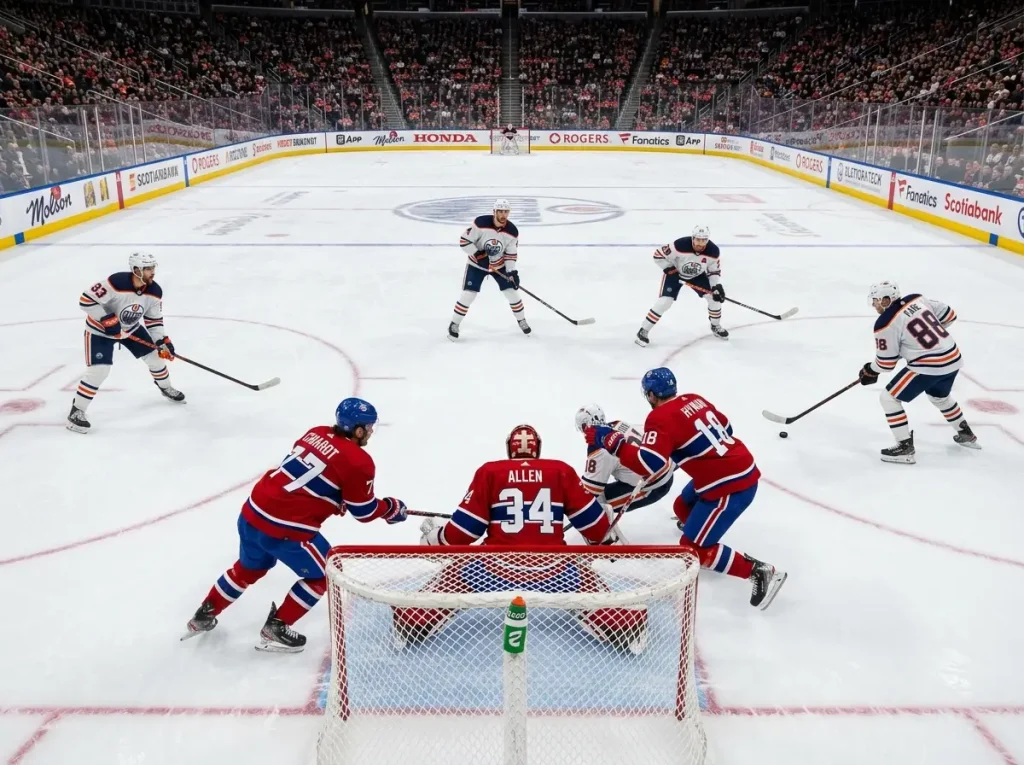
Add a third number: home points percentage. The LA Kings posted .829 points percentage at home in 2024-25 with a 1.94 goals-against average and an 83% penalty kill. That isn’t form, that’s structural — a team that’s hard to score on at home, every night, all season. When a team plays a Kings-tier home club on the road, the market often prices the favourite too short because it overweights overall record and underweights venue-specific dominance.
The fifteen-minute pre-game research routine I use looks like this: confirm the starter for both sides, check both clubs’ home and road splits separately, pull PP% and PK% with home/road filters, and look at the last three head-to-heads only for systemic style matchups (forecheck-heavy vs. neutral-zone trap, for example). I don’t watch highlights. Highlights tell you who scored. I want to know who controlled the slot and the neutral zone.
Building a daily research checklist that fits in a coffee break
If you’re holding down a job and trying to bet smart, you don’t have three hours per night to break down a six-game card. You need a process that produces a defensible bet (or no bet) in twenty minutes per game.

Mine, refined over nine seasons, runs in this order. First, scan the day’s schedule for back-to-back exposure on both sides. If one team is on the second night and the other is rested by two or more days, that’s the bet I look at first because the data on rest is so strong. Second, check the goalie confirmations from morning skate. A confirmed starter on one side and an unconfirmed-or-backup on the other is a 3% to 5% swing in implied probability, which can be massive if the line hasn’t moved yet. We have a separate guide on how confirmed starters move NHL odds if you want to go deeper on the mechanics.
Third, look at injury reports — not just the headline names but the third-line centre and the second-pairing right-handed defenceman. Hockey lineups are interlocking. Losing a 14-minute third-line centre to a flu bug forces the coach to roll the top two centres harder, which on the second night of a back-to-back is a slow-motion disaster. Fourth, pull the special-teams numbers. Fifth, check the referee assignment if your book offers penalty-related props. Sixth, compare the line to the no-vig fair line you can derive from a reasonably sharp US book. If the gap is more than two cents in your favour, you have a bet worth sizing. If it’s less, you pass.
That whole sequence takes about twelve minutes once you’ve done it for a month. The discipline is in passing on the games where the gap isn’t there. Most nights I bet two or three games out of a twelve-game slate. The other nine I watch.
What UK books actually offer on the NHL slate
This is the section I get most emails about. UK NHL coverage at major books is broadly excellent on the moneyline, puck line, and total, decent on first-team-to-score and total-goals-bands, and patchy beyond that. Player props — anytime scorer, shots on goal, point totals — are available at most UKGC-licensed books for marquee games but thin or missing entirely for a Tuesday night game between Columbus and Buffalo. If you want serious prop volume on the secondary slate, you’ll feel that limitation.

Live betting on the NHL at UK books has improved considerably since around 2022. Most major operators now offer next-goal markets, period-by-period totals, and live puck-line adjustments. The latency between TV and the live odds matters — typical UK feeds via Premier Sports run a few seconds behind the actual play, and the books update on the official feed, which means you’re never going to scalp a live line based on what your TV shows you. If you’re betting live, treat it as a research exercise based on the flow of the game, not a stopwatch arbitrage.
Cash-out is widely available and almost always priced poorly. The implied juice on a cash-out offer is typically 5% to 12% in the book’s favour relative to a true theoretical hedge. Treat cash-out as an emergency exit, not a strategy. If you find yourself cashing out three times a week to “lock in profit”, you’re paying tax to feel clever.
Two practical UK constraints worth flagging. First, fractional odds are still the default at most domestic books, and the mental friction of converting 6/4 to 2.50 to a 40% implied probability mid-research adds up over a season. Switch your account to decimal odds in the settings if your book allows it; almost all do. Second, stake limits on NHL props are typically lower than on the moneyline, and they can be lowered further on accounts that are flagged as sharp. If your prop stake suddenly halves overnight, you’ve been noticed.
Staking — the unsexy part that decides everything
The single most reliable predictor of whether a UK punter survives a full NHL season is not pick quality. It’s stake discipline. I’ve seen punters with 56% win rates blow up because they doubled stakes after a three-bet skid. I’ve seen punters with 53% win rates compound nicely over three years because they never deviated from a 1% flat stake.

My baseline recommendation for someone starting out is to bet 1% of bankroll per game, flat, regardless of confidence. That sounds boringly small. It’s meant to. The point of a flat-stake system is to survive variance long enough for any genuine edge to surface. NHL betting has fat tails — long losing runs happen, including to people with real skill. A 1% flat bet survives a fifteen-bet losing streak with a 14% drawdown. A 5% flat bet does not.
Once you’ve kept records for at least 200 bets and have credible evidence of an edge (positive closing line value being the cleanest signal), you can move to a fractional-Kelly system — typically quarter-Kelly, occasionally half-Kelly if you’re confident in your edge estimates. Even at quarter-Kelly, stakes will swing between roughly 0.5% and 3% of bankroll depending on edge. That’s plenty of variation. Full Kelly is for people who know precisely how confident they are, and almost nobody does.
The structural rules I keep are simple. Never raise stakes during a losing run. Never raise stakes the morning after a winning night. Cap any single bet at 3% of bankroll regardless of perceived edge. Recompute the bankroll, and therefore the unit size, only once a month. Hockey will give you plenty of opportunities to be patient. The market rewards patience and punishes urgency, every single time. For daily updates and data-driven analysis, always consult the best UK ice hockey betting tips platform before finalizing your slip.
How many NHL games per day should I include in an accumulator?
Honestly, fewer than your book wants you to. The maths is brutal: even three legs at average UK NHL juice gives the book a 12% to 15% edge before you even pick. If you"re going to play accas, treat them as a small recreational allocation — under 5% of weekly stakes — and keep them to two or three legs. Singles produce better long-run results in hockey because the variance per game is already high.
Are NHL Western Conference games harder to handicap from the UK due to late puck-drops?
They"re harder to watch, not harder to handicap. The data is the data regardless of kick-off time. The actual UK-specific problem with West Coast games is that goalie confirmations, scratches and final injury news drop around 11pm to midnight UK time, well past when most people are betting. If you"ve placed a bet pre-confirmation, you"ve accepted that risk. Either bet later in the evening when news is out, or accept that you"re guessing on the lineup.
What is reverse line movement in NHL betting?
Reverse line movement is when the betting line moves opposite to where the public money is. If 70% of bets are on the home team but the line is moving toward the road team, that tells you sharp money — bigger, more informed stakes — is taking the road side hard enough to push the price the other way. It"s the cleanest single signal of sharp action in hockey, and fading reverse line movement is a known way to lose money slowly.
Which NHL teams historically beat the closing line most often?
That question is backwards — closing line value is about how well your bets price relative to the market, not which teams the market underprices in aggregate. Over long enough samples, the market is roughly efficient on teams. Where edges persist is in specific situations: home dogs against rested favourites on the road, plus-money sides with confirmed elite starters, totals in games with extreme PK matchups. Track CLV by situation type, not by club.
Articles
Created by the "Ice Hockey Betting Tips" editorial team.
